
Message from the President: Turning Around—Why Young People Need Mastery, Belonging, and the Courage to Question
I am not done with my changes.
—Stanley Kunitz, The Layers
Over the summer, I have been reading, watching, and listening to understand how people are making sense of this tumultuous moment, and especially how they are talking about it with young people. Today’s adolescents see enormous possibility ahead. They are also navigating the uncertainty created by artificial intelligence, mounting strain on our democracy, and climate disruption, and grappling with deep questions about what and whom to trust.
One theme kept surfacing, most clearly at a dinner with colleagues and partners in the field: belonging. Over the course of an evening, people shared about their own adolescence. They talked about the adults who knew them, the places where they felt seen, and the moments when someone helped them discover gifts they did not yet recognize in themselves. They described belonging not as a “soft” addition to learning, but as the ground beneath it that allowed them to ask hard questions, take intellectual risks, and stay in difficult conversations.
That conversation was still with me this summer when I came across a short video of an educator explaining Plato’s allegory of the cave to her 8-year-old. (Yes, this is how I spend a leisurely summer evening.) What struck me was not only how clearly the educator made an ancient idea accessible, but also the child’s instinctive response.
You know the story: Imagine you have spent your whole life in a cave, watching shadows on a wall, taking them for the world itself.
Then, one day, you turn around.
At first, the fire stings your eyes. You climb toward the light and slowly begin to understand a new reality. When you return to tell the others what you have seen, they don’t believe you. They would rather keep looking at the wall.
On hearing the story, the child in the video asks, “Why wouldn’t they just turn around?”
That question has stayed with me. It offers a useful way to think about what young people need now, especially as artificial intelligence becomes more pervasive. Across education and philanthropy, we talk a lot about the capacities that will matter most: skills like critical thinking, discernment, creativity, collaboration, relational intelligence, agency, and adaptability. They all matter. But a list of durable skills alone doesn’t fully capture all that is required to meet this moment.
Plato’s allegory of the cave may offer both a simpler and a more expansive way of describing what’s needed in these uncertain times: the willingness, and perhaps the courage, to turn around. Today, that means questioning what looks obvious and interrogating answers, rather than accepting them at face value. It means noticing the assumptions tucked inside what we’ve been shown, staying with the discomfort of nuance and complications, and being willing to change our minds when the evidence demands we do so.
The Purpose of Public Education
These themes are present throughout Renewing Public Education’s Purpose, the Stanford Social Innovation Review series the Stuart Foundation was proud to cosponsor with the Hewlett Foundation. Across ten essays from very different vantage points, contributors explored this foundational topic. In the concluding piece, “Building Schools Worth Defending,” Kent McGuire and Matt Wilka gather many of the threads. They argue that schools must prepare young people for full and rich futures. This includes work, of course, as well as civic leadership. The “hub and spoke” school design they propose combines a strong common center with flexible pathways for students to pursue their interests and aspirations. In the language of the cave, it is a design for turning around with the support of one’s school community.
It is worth naming that the same capacities that prepare a young person to earn a good living also prepare them to be engaged leaders in their community: curiosity, judgment, and the ability to keep learning, to work well with others, and to tell a real signal from a convincing fake. We do young people a disservice when we treat preparation for work and preparation for citizenship as competing purposes.
This matters especially during adolescence, the developmental period at the center of our work at the Stuart Foundation. Adolescence is the second great window of brain development, a time when young people are forming identities, testing ideas, deepening relationships, and beginning to understand that they do not simply live in the world—they have the power to shape it.
Mary Helen Immordino-Yang’s work on transcendent thinking has informed my understanding of this pivotal time. Her work speaks to the importance of opportunities for adolescents to move beyond learning discrete facts to wrestling with the hard questions of where an idea came from, why it matters, and who it affects. That kind of questioning isn’t a side benefit of learning. It is where the deepest learning happens and it depends on deep content knowledge. Young people need to study history if they are going to recognize when history is being distorted. They need to learn and do science if they are going to weigh competing claims about the natural world. They need to be skilled and confident in mathematics and literacy, and engage in sustained encounters with literature, art, civics, and culture. Through these endeavors they experience the challenge and satisfaction of working towards mastery.
You can see this in Nilesh Halankar’s precalculus classroom at Savanna High School, where students use functions to analyze climate data and predict future temperatures and emissions. The work is mathematically demanding and connected to a question they recognize as consequential. One student who had worried about taking honors math left the course excited, confident, and ready to take on the next math challenge.
Without knowledge, discernment isn’t possible. It is hard to challenge conventional wisdom if you do not know enough to tell the difference between a viable idea and a confident falsehood. We cannot evaluate the shadows if we do not know enough about the world beyond the cave.
So rather than debating content knowledge versus durable skills, I think we should ask different questions. How are young people using what they know? Can they question it? Connect it to something else? Test it against evidence? Use it to solve a problem, or change their minds? AI makes this more urgent, not less. Deep knowledge and human judgment strengthen one another. The more fluent the technology becomes, the more young people need to ask: Is this true? What is missing? Whose perspective is not here? What assumptions are buried inside the answer?
What Belonging Enables
There is another part of the cave story I keep coming back to, rooted in our understanding of how learning happens. Learning is not a solitary endeavor. Although Plato’s allegory can be interpreted as the journey of a single individual toward enlightenment, led by someone who already knows the way, we know that learning is a collective endeavor. We turn around with and because of one another.
In her recent essay in the Stanford Social Innovation Review, Isabelle Hau writes about relational intelligence as the deeply human work of building trust, navigating tension, repairing ruptures, and creating meaning with other people. Her observations feel important here because discernment is relational, too. We refine our thinking, in part, by being in conversation with people who do not see everything the way we do. Someone asks a question we had not considered. Someone’s experience contradicts and complicates our own. Sometimes we realize we were wrong.
This is where belonging matters. Not as the soft practices we introduce before academic work begins or as a reward for completing it. Belonging helps make the work possible. We all know that it is difficult to ask the question that might sound foolish, admit that we don’t understand something, or change our mind publicly when we feel like an outsider, worry about being judged, or don’t feel safe enough to bring our full selves into communal spaces.
Belonging is also foundational for democracy, which requires us to share power with people whose experiences and perspectives are different from our own. It takes conviction to challenge falsehood and injustice, but also enough humility to know that none of us sees the whole picture, or has a complete view of the fire, the cave wall, or the forces casting the shadows. Public schools remain among the few places where young people from different backgrounds can learn to discuss, discern, and make meaning together. That’s why I am so excited about the adolescent agenda taking shape in California and beyond. One key element of this work is to redesign secondary schools around a fuller picture of how young people learn and develop. This means rigorous academics alongside strong relationships, real choices, real-world experience, and the chance to contribute to something larger than themselves. For me, mastery and belonging are central to that work.
Students in Linked Learning pathways describe what this combination can feel like: challenging coursework tied to internships, adult mentors, and a clear sense of purpose. In a recent survey of more than 4,000 students, one Los Angeles ninth grader said, “I realized that the work I put in today is my future.”
McGuire and Wilka end the SSIR series by challenging funders to define what a flourishing, democratic life requires with the same care we have brought to mapping workforce skills, and then to stand behind the educators and communities trying to build schools around that larger purpose. I think they are right.
From Purpose to Practice
A publication series can help name a shared vision, but it can’t build the structures to realize it. That work is slower and messier. It also requires more than asking educators to innovate inside systems already stretched thin. Moving from purpose to practice means supporting communities redesigning the high school experience; investing in educators and leaders; strengthening the connections between schools, families, colleges, and workplaces; and developing measures that assess the full range of requisite knowledge, skills, and conditions young people need.
At the Stuart Foundation, this is the view of adolescent thriving we are working to support. Young people should leave school with essential knowledge. They should know how to do hard things. They should know how to keep learning, work with other people, and make sense of a changing world. They should also leave knowing they have something worth contributing.
The shadows are only getting more convincing, and now they can be generated on demand, by systems designed to agree with us. Cynicism and distrust are just another wall to face. What I hope for this generation is to build the muscle Plato was describing: the willingness to feel the light sting, to question, to turn around, and to do it in the company of others. That may be the most important skill a school can teach. And unlike so much else right now, it is entirely, stubbornly human.
In solidarity,
Sophie
What does “turning around” look like in your school, your district, or at your kitchen table? I would love to hear about the conversations you are having at stories@stuartfoundation.org.
***
Stuart Foundation at 40: An Interview with Marisa Saunders and Jorge Ruiz de Velasco
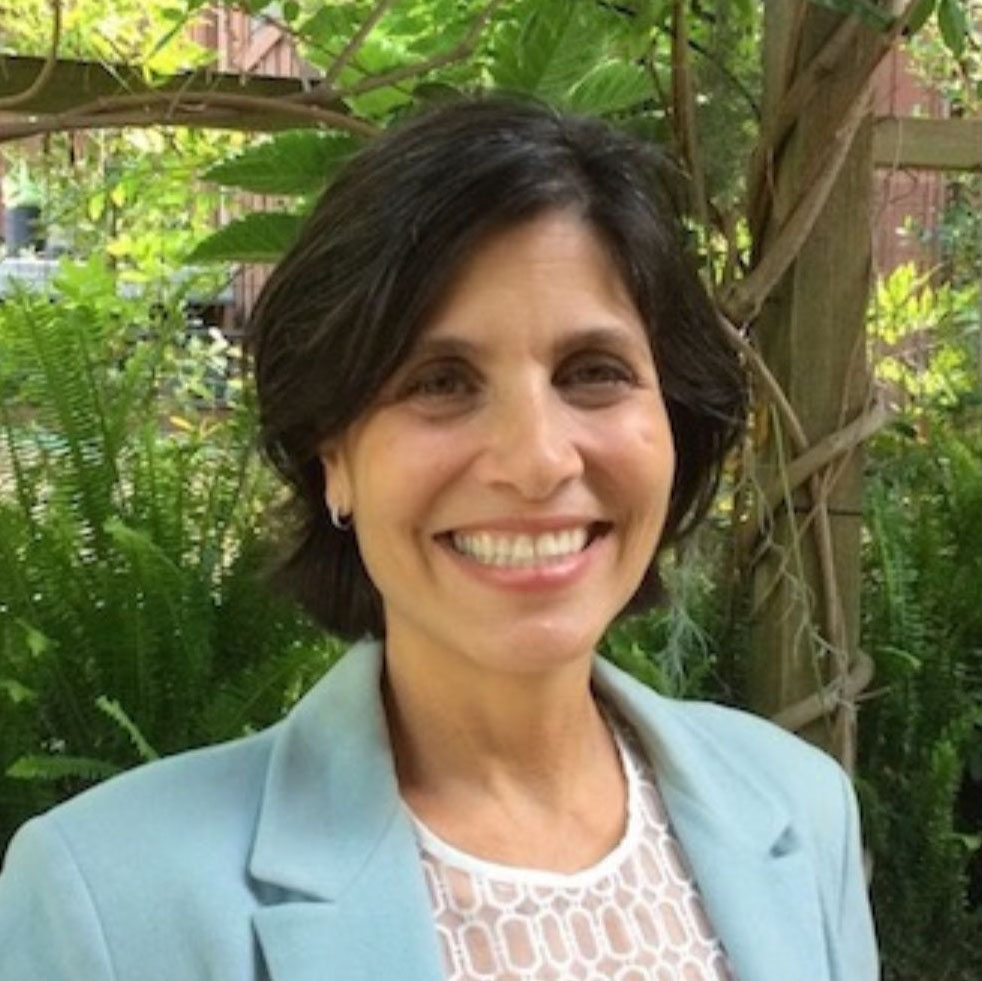
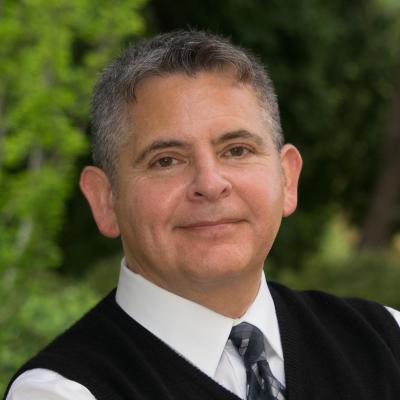
In this interview, Marisa Saunders, Senior Researcher and Co-Director of the UCLA Center for Community Schooling, and Jorge Ruiz de Velasco, Deputy Director and Senior Research Associate at Stanford’s John W. Gardner Center for Youth and Their Communities, sat down with Roberta Furger, the Foundation’s Senior Director of Narrative and Strategy, to reflect on the decades of effort and change that have contributed to today’s opportunities to redesign secondary schools. They offer a through-line across initiatives and reforms, touching on many of the issues and policy areas that have been central to the Foundation’s work.
We’re moving away from seeing community as something outside the school that occasionally supports learning, toward understanding that communities are essential partners in learning itself.
***
Stories of Promise and Progress
With each Update, we share examples of how policies, practices, and innovative solutions and strategies are advancing more equitable opportunities for California’s adolescents. Explore the resources below for bright spots that illustrate how young people are making sense of the world, how rigor and relevance pair to create better learning experiences, and how youth are developing agency and taking action. As always, we encourage you to share your stories. What’s giving you hope? Where are you seeing systems and practices shift to support thriving? Share your stories of change and challenge with stories@stuartfoundation.org.
Youth present on issues for Project Soapbox
In May, California students joined other young people from across the country in Chicago to speak about issues they care about for Mikva Challenge’s Soapbox Nation. Dharini, a student from Riverside, spoke powerfully about how youth political disaffection is rising, “Not because we don’t care, but because we don’t feel heard.” She offers solutions to improve youth civic engagement and makes a call to action to her fellow youth: “Imagine a future where your feed isn’t just noise, but a platform for change; where you and your friends know how to fact check, organize, and vote; where our generation turns apathy into action.”
Designing civic learning for today’s classrooms
This Q&A highlights how Facing History and Ourselves’ Civic Education Curriculum Collection guides students to explore civic issues through a historical and moral lens. Erica Hodgin, Facing History’s Senior Director of Civic Education, explains how the collection builds students’ intellectual rigor, ethical reflection, and confidence as civic actors. “Ultimately, our aim is that young people develop a stronger sense of civic agency—that they can draw on their critical thinking skills and ability to engage in civil discourse to attend to issues that matter to them in their schools and communities.”
Unlocking transcendent thinking in precalculus
A new video from USC CANDLE shows how pairing rigor and relevance in advanced math classes supports students’ transcendent thinking, the higher-order skills that neuroscientist Mary Helen Immordino-Yang describes as going beyond memorization of facts to analysis and understanding of complex contexts. In Nilesh Halankar’s precalculus class at Savanna High School in Anaheim, lessons about functions incorporate the topic of climate change—for example, students review historical data, analyze and graph trends, and predict future temperatures and emissions levels. “When you teach math procedurally, it’s easy to forget, but when you connect to the outside world, it helps them remember,” Nilesh says. Students highlight how the math concepts they’re learning connect to the world around them, and how this supports confidence in their math skills. One student, Elizabeth, noted: “I was worried about taking honors math… but my concept of what math is changed and now next year I’m going to take AP Calculus.”
Students find purpose and meaning in Linked Learning pathways
Linked Learning Alliance recently published their fifth annual survey of more than 4,000 students in Linked Learning pathways across California. Students shared insights about how career pathways build their confidence and purpose, how internships open real-world opportunities and connections, and how challenging coursework helps shape their academic identities. “I realized that the work I put in today is my future,” shared one first-year student in Los Angeles. “That changed my mindset about school and my learning. I now want to do my best and give it my all.”
Youth journalism powers local news in LA
At the end of May, The LA Local celebrated 18 graduating seniors—all of whom are headed to college this fall—after a year of reporting with dozens of other students as part of LA Local’s Youth Journalism program. These students, representing 27 high schools across Los Angeles, developed reporting, interviewing, and storytelling skills while producing journalism to serve their neighborhoods. “I became a source to my community, where people would constantly approach me for questions they have over certain local events or articles that they read,” said Genesis, a 2026 program alum. “There is no area in my life that the program has not helped me in. It has impacted my social life, character, reputation, personal life, and so much more.”
Youth media highlights civic engagement
Through KQED’s Youth Media Challenge, middle and high school students are invited to explore how they see themselves, the world, and the future by creating and publishing original audio, video, and images. Youth from across the country have created media elevating youth civic engagement. Sahasraprithi, a student in Connecticut, talks about a youth-led voter registration drive as an example pushing against the stereotype that Gen Z is politically disengaged. Sophie, a student from Berkeley, shares about a civic project she did in 4th grade and advocates for Berkeley to institute the state Seal of Civic Engagement for all students.
The Civic Power of Young People in California’s Central Valley
“For young people in the Central Valley, democracy doesn’t always feel accessible, responsive, or built for them,” said Saa’un Bell of Power California. Through a Berkeley Goldman School Democracy Policy Fellowship, she worked with Goldman student researchers to explore how to build a democratic system that works for youth in the Valley. Through interviews with academics and community organizers, focus groups with young people in Fresno, and analysis of survey data, the team identified the interconnected barriers suppressing civic engagement among young people in Fresno. They also offer targeted recommendations for messaging, outreach, and civic opportunities to build youth civic power.