
In recognition of the 40th anniversary of the Stuart Foundation’s investments in California, the Foundation is engaging in a series of conversations to better understand both California’s progress toward advancing an equitable public education system and the next critical steps in that journey.
In this interview, Marisa Saunders, Senior Researcher and Co-Director of the UCLA Center for Community Schooling, and Jorge Ruiz de Velasco, Deputy Director and Senior Research Associate at Stanford’s John W. Gardner Center for Youth and Their Communities, sat down with Roberta Furger, the Foundation’s Senior Director of Narrative and Strategy, to reflect on the decades of effort and change that have contributed to today’s opportunities to redesign secondary schools. They offer a through-line across initiatives and reforms, touching on many of the issues and policy areas that have been central to the Foundation’s work.
↪
Throughout this story, we highlight examples of resources that the Foundation has supported throughout the years.
Setting the Stage for Secondary School Redesign
Roberta: The last decade-plus has seen huge shifts in education funding and policy in California, and you both have had a front-row seat to these changes across a variety of different roles. What are the most significant policy shifts that are making a difference for adolescents, and what will it take to continue and deepen progress?
Jorge: The way that we fund and govern schools changed 13 years ago with the passage of Local Control Funding Formula, and that set the stage for a set of initiatives to begin to fund and create new models for redesigning high school. Two big ideas have shaped this. First, the emerging science of learning and development has reinforced the idea that the highest purpose—the promise—of education is the full development of human beings, not just the more narrow social goals of college, or career readiness or economic readiness. The other idea is john a. powell’s conception of targeted universalism: can we set social goals and make changes that are designed for everybody, while being especially mindful of those who have been farthest behind in opportunity?
Over the 13 years, we’ve had the California Community Schools Partnership Program (CCSPP), the Golden State Pathways Program, the Equity Multiplier Initiative for the most struggling schools, and different efforts to support students’ behavioral health and wellbeing. These investments in local innovation represent funding streams for helping schools make these fundamental redesign changes.
Marisa: LCFF is an important milestone. It marked more than a funding change—it represented a change in how California understood its responsibility to young people. It signaled a significant shift toward equity-driven funding and local decision making, enabling schools and districts to think differently about the purpose of schooling. It also recognized that the people closest to students—their families, educators, and communities—should have a greater voice in shaping educational priorities, even if implementation has been uneven.
The passage of CCSPP in 2022 represents an important evolution of that vision. Community schools recognize that academic outcomes emerge from strong relationships, belonging, health, and opportunity. CCSPP may be one of the first large-scale investments in the state that explicitly supports schools as hubs for integrated student supports, authentic partnerships, and local decision-making. Along with the other investments in school redesign that Jorge mentioned, community schools reflect a broader understanding of what success means and what young people need to learn, belong, and thrive.
↪ LCFF resources supported by the Foundation
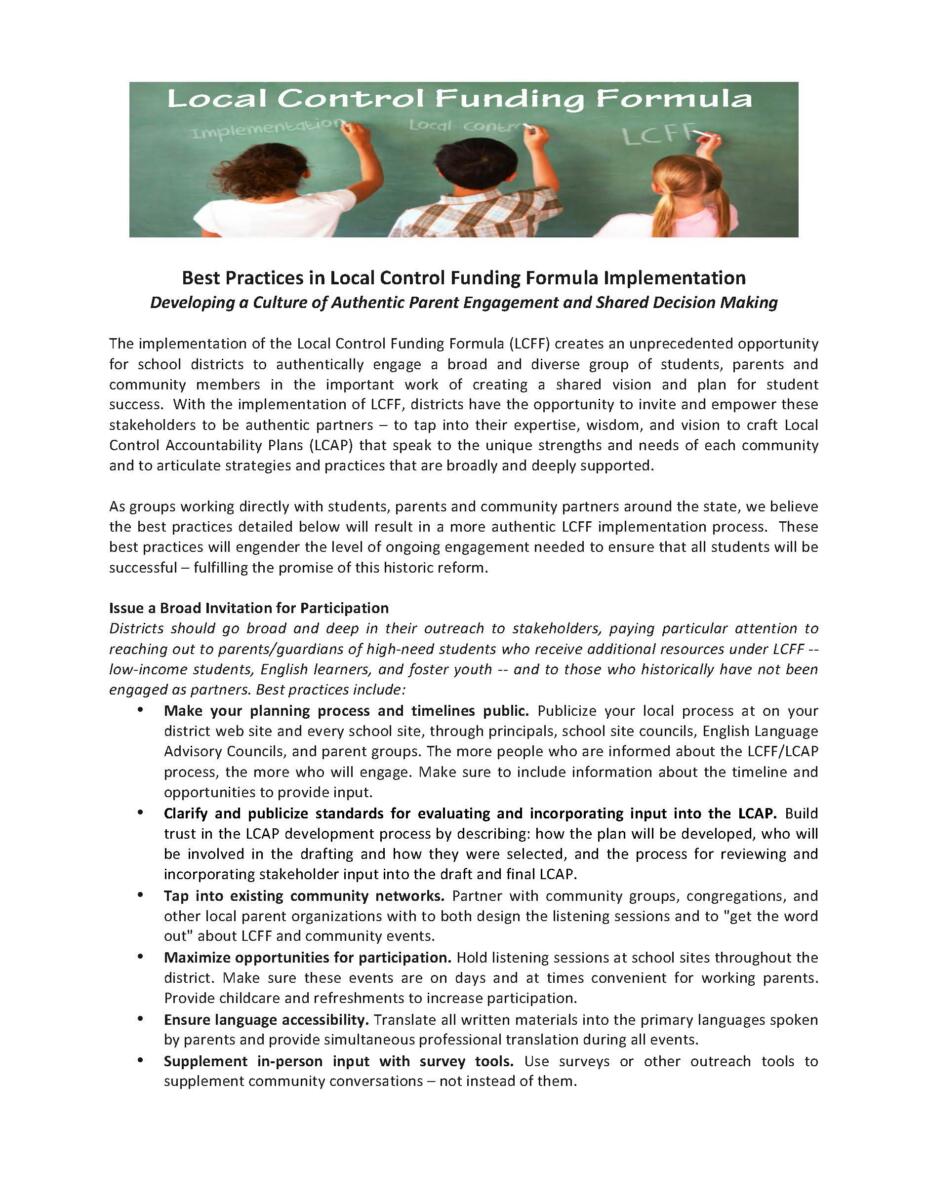
Public Advocates highlighted best practices for implementation
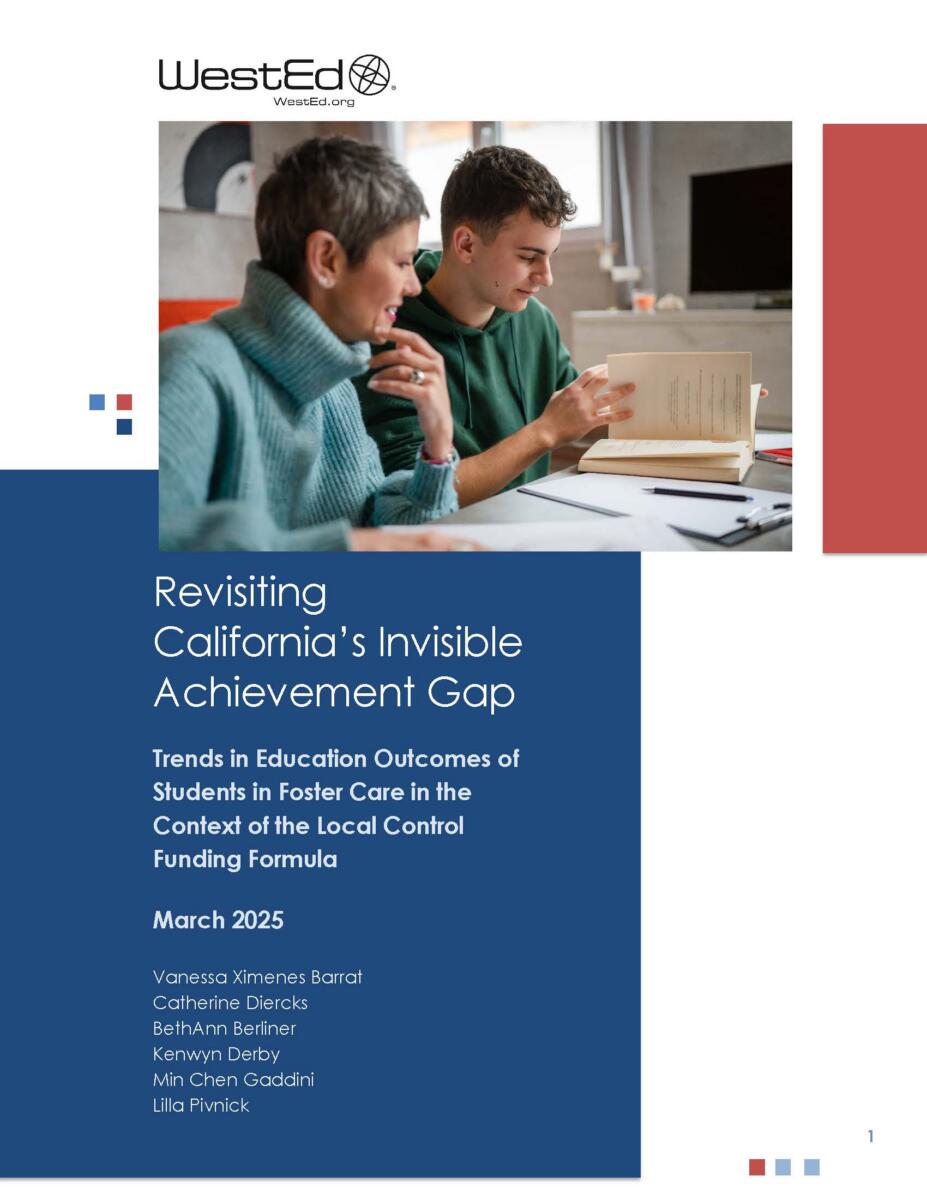
WestEd elevated trends in education opportunities and outcomes for students in foster care
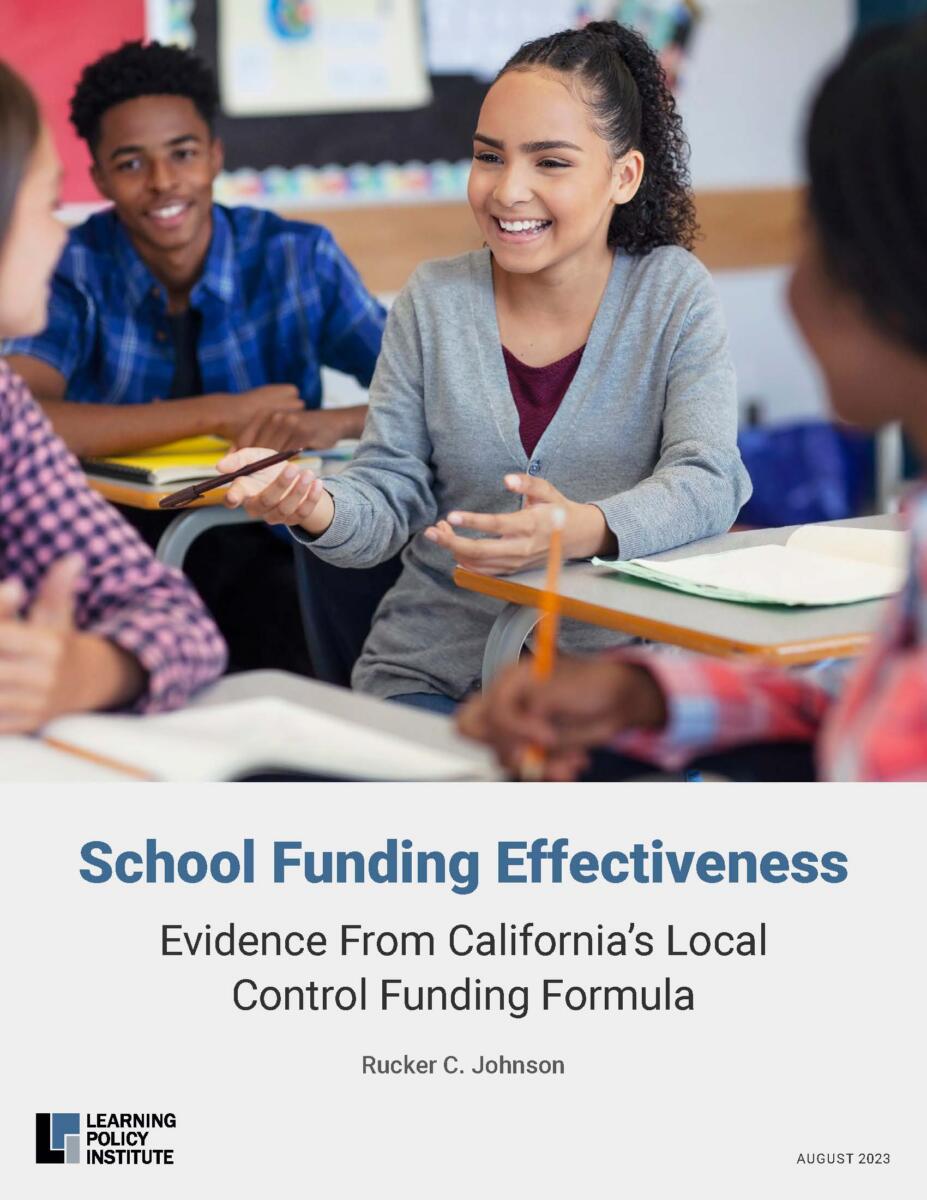
Learning Policy Institute reviewed outcomes of LCFF
Roberta: We know that concepts like community schools or college and career pathways have deep roots in California and elsewhere, and that LCFF built on decades of research, organizing, advocacy, and litigation. Can you help us anchor these more recent efforts to the longer arc of policy and practice change? What do we need to know about what came before to better understand the current context?
Jorge: The thread that links the last five decades of change in public schooling is the question of purpose. What is the purpose of public schools? From roughly the beginning of the 1980s through the end of 2010, school reform was anchored by an argument that a central purpose of our schools was to make America more economically competitive and to prepare youth for effective engagement in the evolving economy. Since 2010, the emerging science of learning and development–rooted in insights from neuroscience and social psychology―has developed evidence for an argument that the most urgent purpose of education ought to be the full and positive development of human potential. Developmental education encompasses the social, moral, ethical and reasoning self. The evidence also suggests that this approach is the superior path to effective social, civic, and economic development. These insights have opened the path for innovations reflected in community schooling, career technical education and community-linked learning, and project-based learning―to name a few examples―that help develop collaboration skills and provide opportunities for youth to make meaning of the systems and the world they will navigate over a lifetime.
The emerging science of learning has developed evidence for the argument that the most urgent purpose of education ought to be the full and positive development of human potential, including the social, moral, ethical and reasoning self.
Marisa: I’d add another thread to that history. Over the past several decades, we’ve seen a gradual shift from thinking of schools as institutions that primarily deliver education to recognizing them as institutions that build relationships, strengthen communities, and create opportunities for young people to thrive. Community schools, college and career pathways, and many of the reforms we’ve discussed should not be thought of as separate initiatives—they represent different expressions of a much longer effort to rethink how schools support learning, relationships, and opportunity, built on decades of research, advocacy, community organizing, and pioneering schools.
What’s different today is that California is beginning to invest in these ideas as part of a coherent vision for school redesign rather than as isolated innovations. Rather than asking schools to adopt one more program, we’re asking them to rethink how they organize learning, leadership, partnerships, and decision-making around the strengths and aspirations of young people and their communities.
↪ Rooted in Oakland tells the story of Fremont High School’s community-centered approach to transformation.
For me, that’s the real significance of this moment. We’re moving away from seeing community as something outside the school that occasionally supports learning, toward understanding that communities are essential partners in learning itself. When families, educators, community organizations, researchers, and young people work together, schools become civic institutions where relationships are the foundation for learning, where young people learn to participate in civic life, contribute to their communities, and help shape the future while they’re still in school.
We’re moving away from seeing community as something outside the school that occasionally supports learning, toward understanding that communities are essential partners in learning itself.
***
Carrying Momentum to Integrate and Scale Redesign
Roberta: You’ve both mentioned discrete initiatives that are changing the experiences of students, and that some schools and districts have integrated these investments into a coherent effort to reimagine high school. What will it take for that level of integration to take hold statewide?
Jorge: These reforms require a new way of thinking about how teachers build their professional capacity over a lifetime of teaching, and what it means for leaders at the site level. Some of the Stuart Foundation’s early investments in the Center for the Future of Teaching and Learning, the New Teachers Center at UCSC, and the Center for Powerful Public Schools in Los Angeles paved the way for a fresh approach to educator professional learning. The work at the cross-university 21st Century School Leadership Academy is also very promising. But we have not put enough attention to educators. We have said, change the structure, change the experience for students, and we forget that there are adults in the building who also need to be helped to navigate change, and to build capacity to meet the moment.
More coherence across initiatives also requires updates to our accountability system, which we know is misaligned. It collects the wrong kind of data, does not reward the implementation of innovative practices, and does not provide ways of using multiple measures and alternative assessments. It also has all sorts of disincentives built in; disincentives for serving high school dropouts, homeless and highly mobile youth, and foster youth in a high-quality way. One response to this has been the work of California’s CORE districts, which have focused on stronger internal accountability systems that create early warning signals to catch students who are falling behind in elementary and middle schools.
↪ Since its inception, CORE Districts has partnered with research organizations like the Gardner Center and PACE to support, study, and amplify its work.
Marisa: I think we’ve built many of the pieces of a new vision for secondary education, but our challenge now is weaving them into a coherent strategy for redesigning schools. The science of adolescent learning and development provides remarkable clarity about what young people need: belonging and relationships; integrated academic, social, and developmental supports; relevant, applied learning connected to the real world and their interests; and flexible structures that respond to their needs and those of educators. Getting there—responding to what we know young people need to learn and thrive—requires more than innovation. To Jorge’s point, it takes alignment across policy, funding, and accountability systems. We still pay so much attention to a test score when we know that we need a multiple-measures framework to align with the whole child education that undergirds and connects initiatives like community schools, college and career pathways, and dual enrollment.
We also need research-practice partnerships that help us learn and adapt over time, and we need to elevate youth voice—not as an add-on, but as an essential part of how we design schools. Ultimately, coherence isn’t created by adding another initiative. It’s created when policy, funding, accountability, professional learning, research, and community partnerships all reinforce the same vision of what young people need to learn, belong, and thrive.
↪ Ten features across two decades
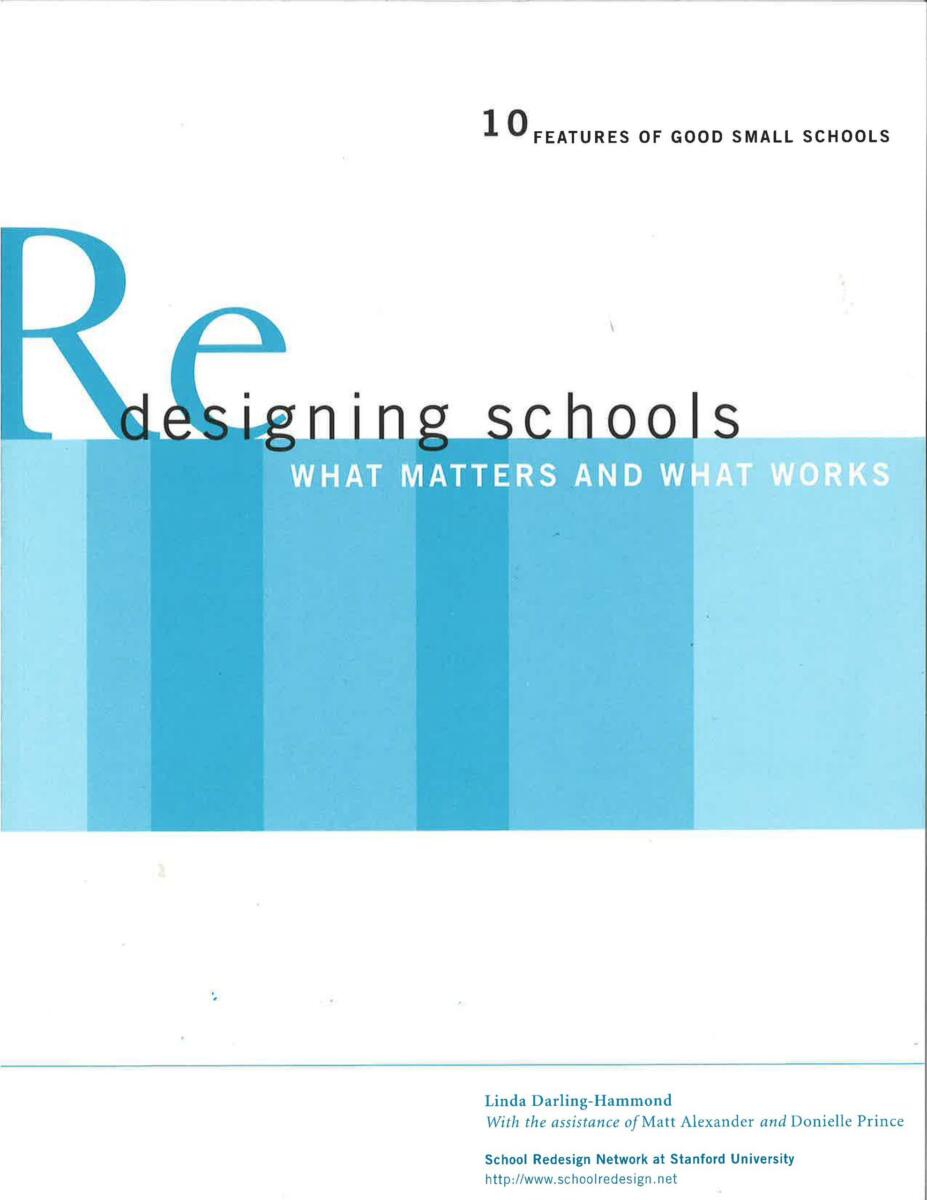
2002: The Stanford School Redesign Network publishes a report on the 10 features of good small schools.
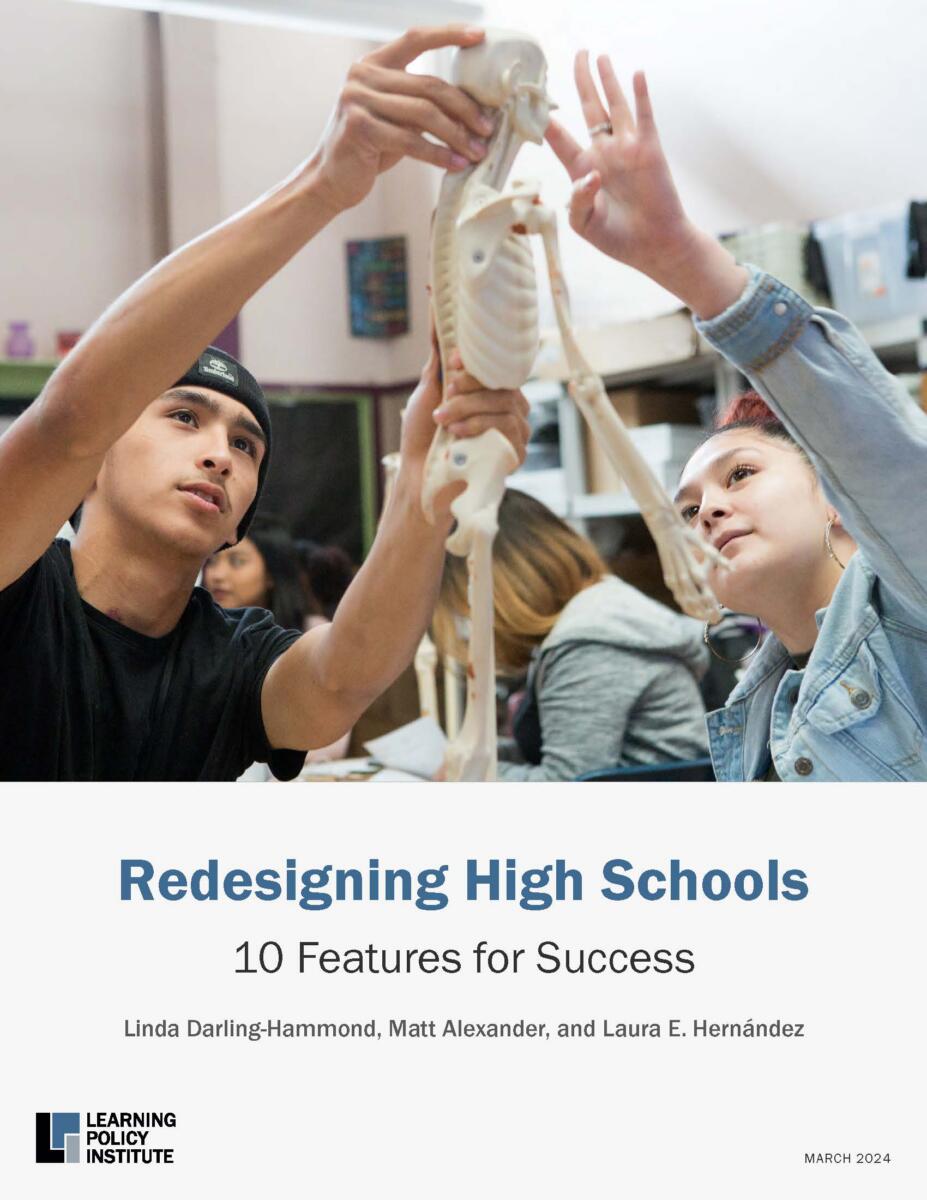
2024: The Learning Policy Institute publishes an updated version of the 10 features for redesigning high schools.
***
Areas for Continued Attention, Work, and Investment
Roberta: Can you share more about how you see accountability and assessment needing to change to keep pace with school redesign?
Jorge: Every high school principal is focused like a laser beam on the one thing they will be rewarded for, which is the four-year cohort graduation rate. High schools do not get rewarded for graduating kids—they get rewarded for graduating them in four or five years. Any kid who is going to need more time to succeed and graduate creates a disincentive—that kid is going to “count against” the school within the system.
It’s not enough to have four or five year graduation metrics (as California has adopted), because some kids who have been out of school for a year or two will still be placed back into their cohort when they come back in, and even five years won’t make a difference within the incentive structure. That creates a particularly powerful disincentive when it comes to homeless and highly mobile youth, and foster youth. The current approach, given these constraints, is to let these youth graduate with fewer credits so they can graduate in four or five years. But that means we’re shortchanging them: helping them graduate by lowering the bar and offering them less.
Marisa: If we think about what has traditionally been measured in high school standardized test scores, graduation rates, and increasingly A-G completion (the course sequence required for admission to the UC or CSU system) alternative measures like performance assessments, for the most part, still aren’t considered by colleges and universities. That means they’re not taking into consideration the incredible growth and knowledge that a young person has experienced over their high school years.
Increasingly, we’re learning that when universities do take this other evidence into consideration—when they look at portfolios or capstone projects, for example—those artifacts often provide a richer picture of what students know, can do, and how prepared they are to succeed beyond high school. Anaheim Union High School District has an amazing relationship with the University of California, Irvine (UCI), where UCI does indeed look beyond grade-point average and test scores, and reviews portfolios and other examples of what students did in high school. And those young people persist and graduate at much higher rates than other students being admitted to UCI.
To me, that’s the promise of performance assessment. It recognizes learning that traditional measures often miss—critical thinking, collaboration, creativity, and the ability to apply knowledge to real-world problems. Those are exactly the kinds of capacities we say we value, and our accountability and admissions systems should value them too.
Community schools create an opportunity to reimagine how we do school, but that requires building the capacity of educators, families, students, and community partners to lead that long-term transformation together.
Marisa Saunders reflects on bridging research and practice to impact teaching and learning
One of the most important lessons we’ve learned is that research has the greatest impact when it is grounded in relationships with schools and communities rather than conducted on them. What we’re learning through place-based research-practice partnerships like the UCLA Community Schools partnership has directly shaped how we’re providing support to community schools statewide through the State Transformational Assistance Center (STAC). We learn alongside our partners, and translate our shared learning into action and recommendations that go beyond that one school site to influence the district and, in this case, the larger state.
The aim of the STAC is to create an infrastructure where technical/transformational assistance, research, implementation, and continuous improvement are fully integrated, allowing learning to occur in real time across sites, districts, and regions. Our goal as one of the STAC partners is not just to study what’s happening (though we are collecting data). It’s about supporting improvement while simultaneously generating knowledge that can inform the field.
We’re doing this through communities of transformative practice, leadership networks, a statewide Multiple Measures Working Group, and other collaborative learning structures that enable educators, researchers, and technical assistance providers to learn from implementation as it unfolds. These structures strengthen the relationships that allow research not simply to document change, but to help people make change. That’s the promise of research-practice partnerships.
Roberta: We know from examples of transformed schools that real and lasting change requires shifts in culture, as well as funding and practices. What is unlocking that culture shift?
Marisa: I think lasting transformation is fundamentally about culture, not compliance. Community schools create an opportunity to reimagine how we do school, but that requires building the capacity of educators, families, students, and community partners to lead that long-term transformation together. It starts with developing a shared understanding and commitment to the work, thinking deeply about what’s happening in the classroom, and creating different structures for decision making.
We’re almost five years into the statewide community schools investment, and many educators are still yearning for a checklist to guide their efforts. That’s understandable, because culture change is much harder than implementing a new program. But lasting transformation doesn’t come from a checklist. It comes from building the relationships, shared understanding, and capacity that allow people to improve together over time.
We’ve actually seen this kind of transformation before. Through UCLA IDEA’s work on Multiple Pathways with Jeannie Oakes, and later through our work with the Linked Learning Alliance examining the relationship between Linked Learning and community schools, we studied pioneering schools that intentionally integrated rigorous academics, authentic work-based and community-based learning, integrated student supports, and strong partnerships with families and community organizations. What distinguished those schools was a shared vision that reorganized teaching, learning, leadership, and partnerships around the whole child. As those structures changed, so did the relationships among educators, students, families, and community partners—and over time, so did the culture of the school.
What excites me is that we’re seeing that shared vision re-emerge through community schools, college and career pathway development, and other redesign efforts. Educators are increasingly organizing learning experiences around the durable skills young people need to thrive, like critical thinking, collaboration, problem solving, and meaningful application of knowledge. At the same time, community and employer partners are becoming true collaborators in learning, strengthening the relationships that support young people’s development. That’s the cultural shift. When we change the structures of schooling, we also change relationships, expectations, and ultimately, culture. We now have proof points across California that this kind of redesign is possible. The challenge is building the capacity and sustained commitment to make it the norm, rather than the exception.
One of the clearest signs of that shift is that educators increasingly expect all young people—not just a select few—to engage in deeper learning and develop these durable skills. That’s a fundamentally different vision of high school, and one that reflects a commitment to equity by expecting every young person to learn deeply, contribute meaningfully, and thrive.
↪ Community schools
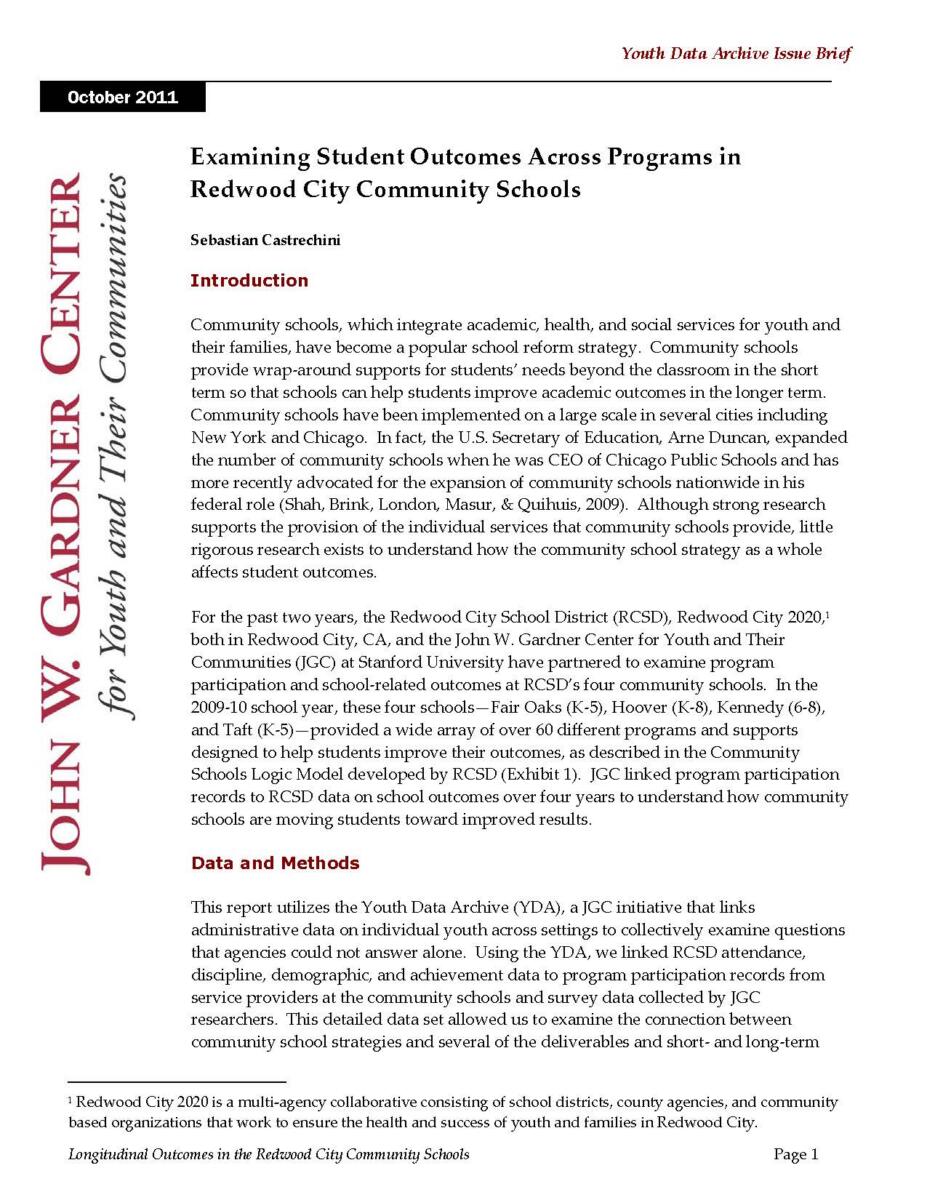
2011: Gardner Center research on Redwood City community schools
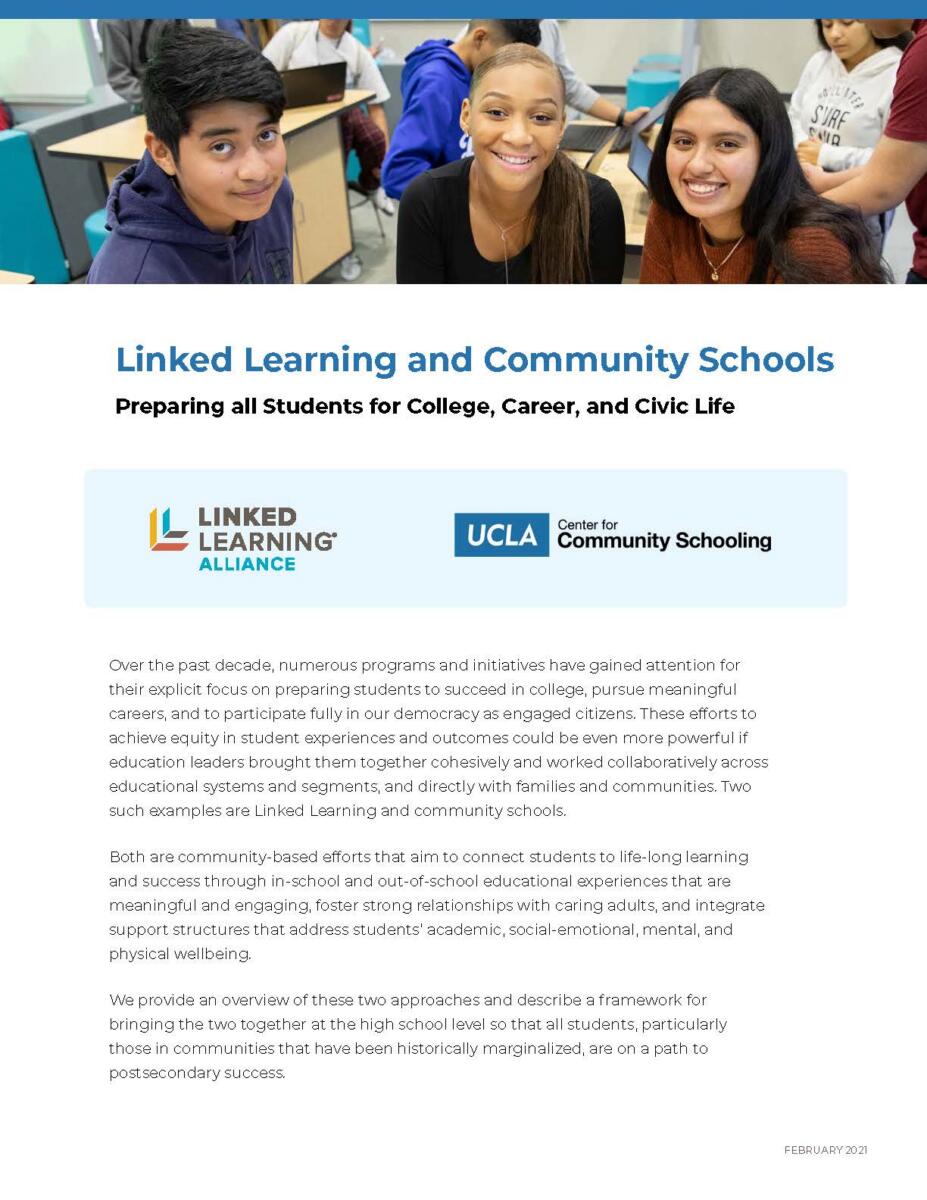
2021: UCLA Center for Community Schooling and Linked Learning Alliance co-publish a framework for integrating two strategies to support student success.
***
Looking Ahead
Roberta: We’ve talked a lot about the building blocks that have been put in place in California over the last decade or so. What’s giving you hope as you look to the future?
Jorge: What I see—and this really gives me hope—is in some of our most innovative alternative high schools, with the kids farthest from opportunity. I see something in those schools and classrooms that was never available to struggling youth when we were in school. The way you unlock the difference between whether you’re going to be a creator or just labor until you can’t do it anymore comes down to access to knowledge.
Now you walk into our improvement-focused alternative schools, and every kid has a computer in their hand. They have AI tools that help them access knowledge in ways they can use. A kid who may be reading at the fourth-grade level can open their computer and ask: everyone’s talking about community schools—what are people saying about what is good and bad about them? And they’ll get a response, and then they can have a really engaged meaning-making (or as social-psychologists might say, “transcendent”) conversation: Do I agree with that? Is that true? Is that part of my experience?
Kids never had access to that in a democratic way. It gives me hope that kids have access to tools I didn’t have access to until I went to grad school.
Marisa: What gives me hope is the sustained investments we are making in young people, families, and communities in this state.
We’re beginning to see greater alignment across research, policy, and practice in ways that feel different from the past. There’s also growing recognition that we need to rethink not just programs, but the relationships that make systems work. Lasting transformation depends on learning alongside educators, families, communities, and young people. I’m especially encouraged by a growing number of places across the state where schools are truly partnering with communities, and where young people are at the center of the work. These examples show us what’s possible. The next challenge is moving from islands of innovation to systems where every young person has access to these opportunities. I’m hopeful because we’ve moved beyond imagining a different future—we’re building it together.
Learn more about Marisa and Jorge’s work
UCLA Center for Community Schooling
John Gardner Center for Youth & Their Communities