
Message from the President: Crafting a Shared Vision for the Future of Public Education
I am so tired of waiting,
—Langston Hughes, “Tired”
Aren’t you,
For the world to become good
And beautiful and kind?
Let us take a knife
And cut the world in two –
And see what worms are eating
At the rind.
This poem, written in 1931, speaks to the frustration many of us feel today about the slow pace of meaningful and lasting change in our public education system—change that expands opportunity and fundamentally improves how young people experience their school-age years.
But for me, the poem is about more than weariness.
As I read Hughes’ words, I also think about the progress that becomes possible only when we are willing to look clearly at what is before us—and then work together to imagine and build what can be. It is a tricky balance to strike: naming and addressing the persistent challenges in our current system while staying hopeful and optimistic about the future. But it is one I straddle wholeheartedly because I see, nearly every week, the ways students, families, educators, and communities are already crafting this future in schools and districts throughout California.
The power of this collective visioning is at the heart of a partnership between the Stuart Foundation, the William and Flora Hewlett Foundation, and Stanford Social Innovation Review (SSIR) to publish a series of essays addressing a question that animates much of our work and my thinking: what is public education for, and how can it evolve to meet its promise? Through diverse voices and perspectives, the series seeks to spark a public conversation—in the publication itself, and more importantly, off-screen: at convenings, in staff meetings, over dinner, or over a cup of coffee.
Although the authors’ perspectives and experiences in public education vary, their writing points to several common themes: Public education must tend to both the individual and the public good. It must help young people develop knowledge and mastery—the deep understanding of history, science, mathematics, literature, the arts, and civic life that allows them to make sense of the world—while also cultivating the durable skills and mindsets they need to shape it. Critical thinking, collaboration, communication, curiosity, adaptability, and a sense of agency are not extras; they are essential to career, civic, and plainly, human readiness.
The essays also remind us that belonging—in school and as part of a broader community—is essential to creating the conditions for connection, commitment, and participation in a thriving democracy. Several authors speak to the importance of authentic and supported student leadership, sometimes described in the shorthand of “student voice.” But voice without agency or power is insufficient. So is voice without the support and capacity to analyze information and systems, develop arguments and proposals, and respond to diverse perspectives with openness and curiosity. I hope you’ll spend time with this collection of thoughtful essays and then spend time thinking and talking about the issues they raise. I welcome your thoughts, questions, and provocations!
In the same spirit, the 55 technical reports and 22 research briefs released as part of Getting Down to Facts III are designed to expand public understanding and support deeper conversation about both the high-level purpose of California’s public education system and the progress and ongoing challenges across a range of specific issues—from math and reading to governance, high school redesign, finance, educator capacity, early childhood education, and more.
As a Foundation committed to a vibrant and equitable public education system in California, we know that every component of the system needs to be strong and well-functioning for the whole system to serve all students well. That means we care about the full spectrum of issues addressed by the research, even if they aren’t currently part of our core strategy. We are proud to have supported all three releases of Getting Down to Facts, beginning with the initial set of studies in 2007, because a clear-eyed understanding of the system as a whole is essential to shaping what comes next.
As with the SSIR series, I urge you to spend some time with the studies and then talk about them. Talk with your family and neighbors, in your school or district, business, nonprofit, or community. Wrestle with the implications for your own community and for our state. It is that individual and collective wrestling that will build the shared vision, public will, and political courage needed to create lasting change.
While much is said and written about the challenges of engaging in respectful discourse across difference, I am also seeing a hunger for deeper conversations. Whether at a large convening or over a more intimate meal, partners who hold very different roles and perspectives across California’s education ecosystem express the desire to make real connections, understand different points of view, and roll up their sleeves and do the work together.
As we head into the summer months, that is what I am holding on to: the opportunity to build on the work and conversations seeded over the long school year. And as the country marks the 250th anniversary of its founding, we will be engaging even more deeply with questions of civic purpose, public education, democracy, and the role young people must play in shaping the next chapter of our shared future.
Over the coming weeks and months, you’ll be hearing more from me and my colleagues at the Stuart Foundation on this. In the meantime, I’d love to hear about the conversations you’re having.
Thank you for all you do for the children and young people of California.
In solidarity,
Sophie
***
Up Close: The Future of High School with Linda Darling-Hammond
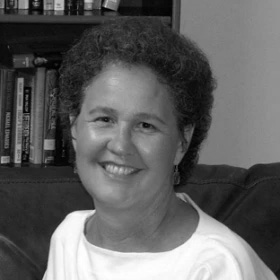
On May 11, 2026, researchers, educators, advocates, and state leaders gathered in Sacramento to discuss Getting Down to Facts III. At the convening, Sophie Fanelli sat down with State Board of Education President and Learning Policy Institute Chief Knowledge Officer Linda Darling-Hammond for a conversation about rethinking learning, engaging students, and expanding opportunity in high schools.
When we build schools that offer opportunities for relational experiences, deeper learning, and deeper thinking, we’re really feeding adolescent development in ways that allow whole adults to emerge with purpose, meaning, and care for their community.
***
Stories of Promise and Progress
With each Update, we share examples of how policies, practices, and innovative solutions and strategies are advancing equitable education opportunities for adolescents in California. Explore the resources below to learn more about how Californians are cultivating thriving for the state’s nearly 2 million public high school students. As always, we encourage you to share your stories. What’s giving you hope? Where are you seeing systems and practices shift to support thriving? Share your stories of change and challenge with stories@stuartfoundation.org.
Beyond One-Size-Fits-All Education Approaches: Rethinking California’s Alternative Education System
This report from the UCLA Center for the Transformation of Schools examines California’s alternative education system, which serves more than 150,000 students and plays a critical role in providing flexible, supportive pathways to graduation. The report explores student demographics, school climate, and academic outcomes across alternative school types, highlighting disparities that often result from system-level barriers facing students in these settings. Based on these findings, the authors offer recommendations for state policy and practices that would address systemic inequities, support educators, and better align state resources with the unique needs of students in alternative schools.
Navigating Uncertainty in the Future of Work for Young People
A session from the 2026 Adolescent Brain Development Summit tackled a question central to supporting young people today: how do we help students build the skills they need for meaningful careers and lives in a rapidly changing world? Panelists, including researchers, educators, and a youth policy coordinator, explored both the risks and opportunities of AI for young people and how it may impact development of the “durable skills”—like creativity, adaptability, relationship-building, and communication—that are sought by employers and also rooted in adolescent brain science. Panelists also named the need to center young people themselves in designing the systems and policies that affect them.
Shared Leadership and Collective Decision-Making in Community Schools
This video from the California Partnership for the Future of Learning highlights powerful examples of one of the unique aspects of California’s community schools approach: true shared leadership and decision-making with students and families. One of the many leaders featured in this video, Charli’von Daily is a high school student and a member of the Statewide Student Advisory Board for Community Schools, which is a platform that brings students from across the state together to collaborate and inform the implementation of community schools. As Charli says: “It really feels like not only do we have a purpose and we’re able to change the things that upset us, but people are willing to hear us out and give us the resources that we need to make those changes.”
Co-Designing with Young People for Equity & Belonging
Last month, National Equity Project (NEP) hosted a virtual workshop for school and district leaders to explore how designing with young people—not just for them—can transform belonging, engagement, and ownership across school communities. Building on NEP’s expertise and many resources, the workshop explored the key shifts for authentic co-design with young people, including moving from occasional student voice to co-authorship with students and the idea that the process of co-design itself creates the conditions for belonging and agency that students deserve—and that create better learning environments.
Community Schools in Los Angeles Unified: Transforming Teaching and Learning
Building on their important research on the positive outcomes of the California Community Schools Partnership Program, Learning Policy Institute published deep dive analyses of specific districts implementing community schools, including Los Angeles Unified School District. In a vivid example, the report describes the district’s first Community Schools Instructional Showcase, where teachers and students shared project-based learning experiences that connect academic content to students’ communities and lived experiences. Students from the School of Business and Tourism described interviewing neighborhood business owners to identify community problems, then designing a public safety event in response—work one student described as “nerve-wracking” but that ultimately “gave me a way to engage with the community and see what employees go through living in such a populated area.” This story reflects how LAUSD’s community schools are not only expanding support services, but also fundamentally reimagining what teaching and learning can look like.